
The bungalow buying guide
Choosing a Bungalow in Kuala Lumpur
Five decisions that matter more than the bedroom count: usable land, everyday layout, privacy, condition and the cost of making it yours.
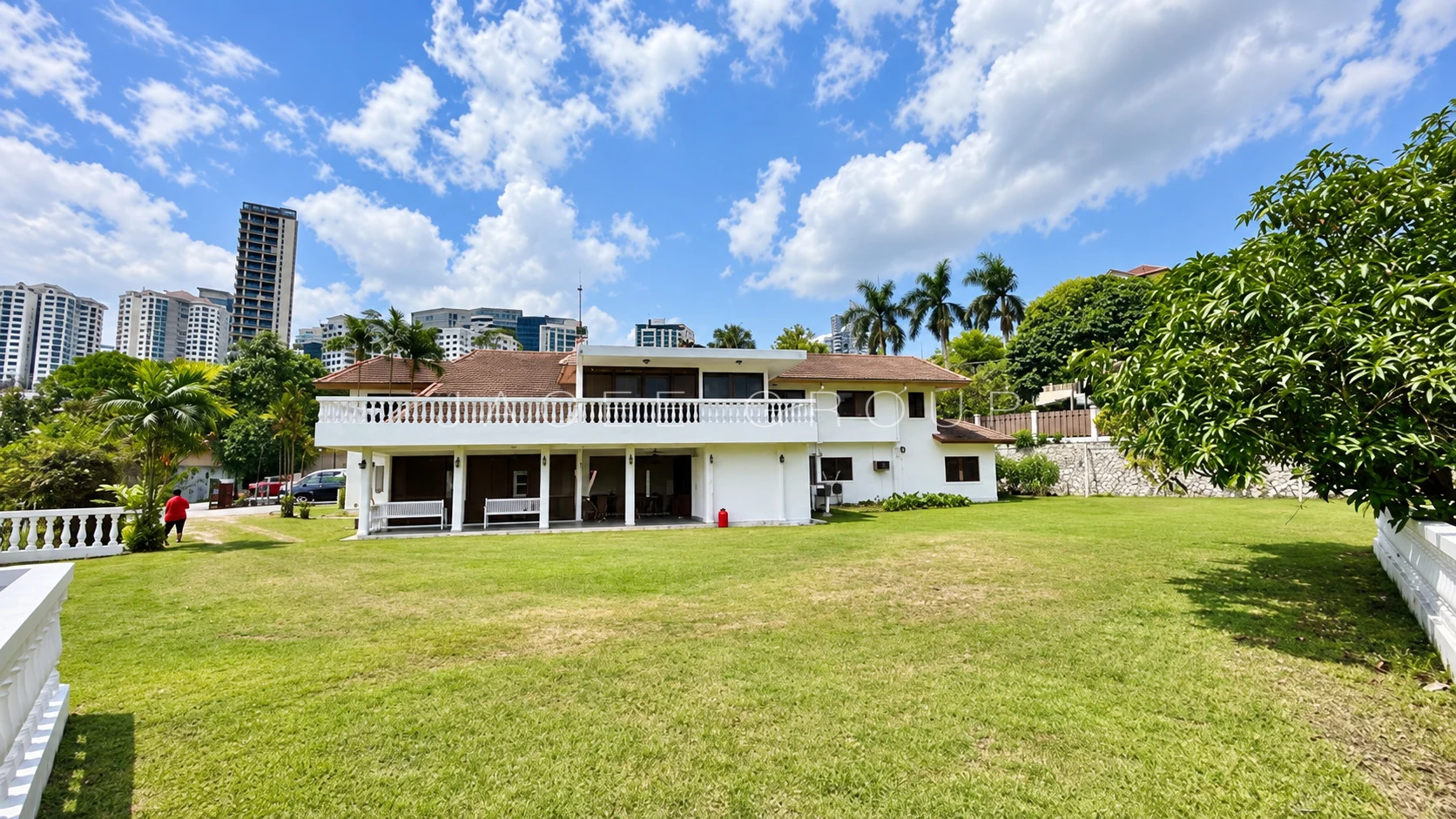
A bungalow gives you more control over how you live: your own outdoor space, room for family and guests, and separation from neighbouring homes. But more space also means more to look after. The right purchase is a house whose space you will use and whose responsibilities you are comfortable taking on.
For a Kuala Lumpur shortlist, start with the things you cannot easily change. A kitchen can be replaced. The shape of the plot, the approach to the house and the relationship with neighbours are much harder to resolve.
Would your family actually use this garden?
Imagine opening the living-room doors while your children play outside. In the first example below, they have one open lawn for a ball game, close to where you are sitting. In the second, the garden is divided into terraces connected by stairs. There is still outdoor space, but you use it differently.
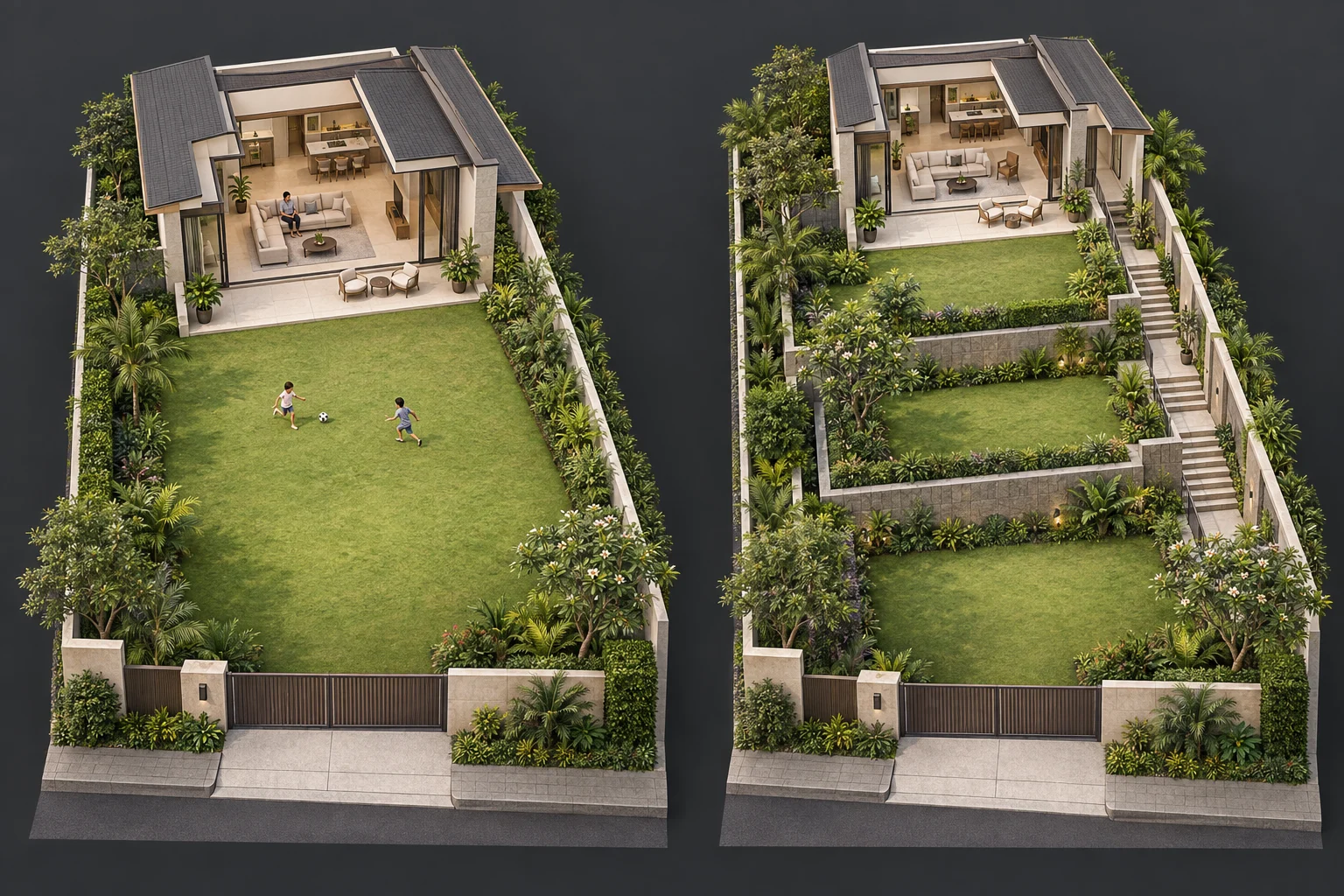
One lawn beside the living room
Better suited to family play and moving between the house and garden. The open space is easy to see from the living area.
Separate gardens across several levels
May suit someone who enjoys planting and distinct outdoor spaces. The stairs and smaller lawns make it less convenient for one large play area.
Illustrated garden layouts.
This is why land area alone cannot tell you whether a bungalow suits your family. A large plot may include steep banks, narrow strips beside the house or garden areas you rarely visit.
For a family lawn, favour a broad, level area connected to the rooms you use. If you prefer gardening or separate places to sit, a terraced arrangement may appeal more. Choose the kind of outdoor space you want to spend time in, then compare its size.
Will the layout work for your family?
If your parents will live with you, a five-bedroom bungalow can still be inconvenient if every bedroom is upstairs. What matters is where they will sleep, shower and spend time with the family.
Compare these two arrangements. Both have a bedroom, bathroom and living area, but the route between them changes daily life.
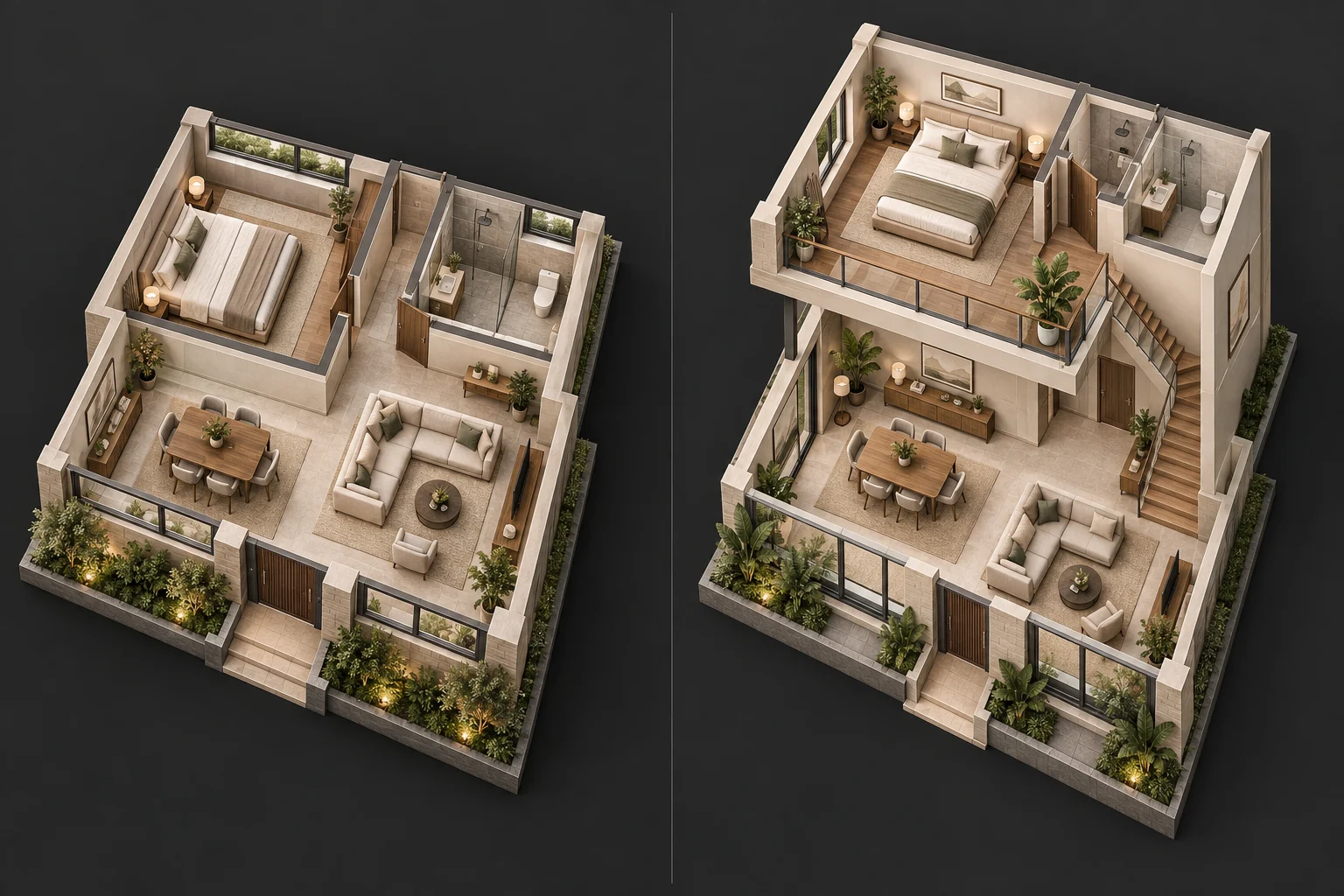
Bedroom and bathroom on the living level
Someone can get up, shower and join the family without using the staircase. This can suit parents who prefer fewer stairs, provided the route between rooms is also free of steps.
Bedrooms upstairs, living spaces below
This separates sleeping rooms from visitors and activity downstairs. It can suit a household comfortable with stairs, but means a change of floor whenever someone goes between the bedroom and living area.
Illustrated room arrangements.
For parents who find stairs difficult, prioritise a proper bedroom and a bathroom with a shower on the main living level. A downstairs study beside a guest toilet is not the same arrangement. The room still needs enough space for a bed and storage, ventilation and privacy; the bathroom must suit the person using it.
A downstairs bedroom also has a trade-off: it may be close to the kitchen, television or entrance. A room reached through a short hallway can offer more privacy than one opening straight into the lounge.
What if the bungalow has a lift?
A lift may make an upstairs bedroom practical. Check that it serves the bedroom and main living floors, with no extra steps along the route. For someone who depends on it, also consider where they could sleep and shower during servicing or a breakdown. A lift alone does not establish that a home is accessible.
At a viewing, follow the route from the proposed bedroom to the bathroom, kitchen and living room. For this decision, that short walk tells you more than the total bedroom count.
Judge privacy from where you will sit
A high wall can screen the entrance while leaving a pool overlooked from an upper-floor window next door. An elevated terrace may give you a lovely outlook but also expose more of your living space. Privacy changes from room to room.
At the viewing, sit in the main lounge, step onto the terrace and look out from the bedrooms. Notice neighbouring windows, passing traffic and the direction of afternoon light. These observations tell you whether the home feels comfortable with the curtains open, rather than only how it photographs.
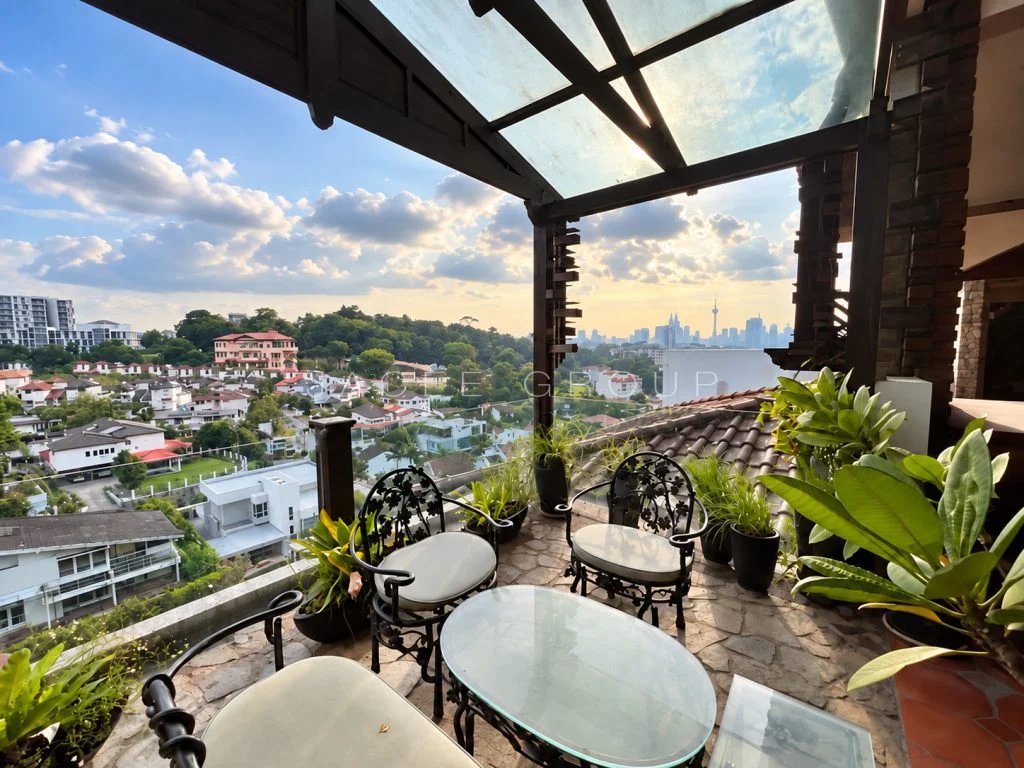
Planting or screening may improve a particular sightline. A busy approach road or a neighbouring building is a more permanent part of the setting. If either would bother you daily, a different plot is usually a better starting point than planning around it.
Decide how much work you want to take on
An older interior is not, by itself, a reason to reject a good house. If the plot and layout work, changing finishes may give you the home you want. The more important distinction is between improvements you choose and repairs you have not yet understood.
Dated cabinets and colours are visible decisions. Recurring leaks, uncertain structural movement or an untested lift are unresolved questions. Putting them into one broad “renovation budget” hides the difference.
You want to move in soon
Favour a home whose essential systems and condition are understood. Pay attention to what is working now and what is included. A lower price loses some appeal if urgent work delays occupation.
You want to personalise the home
Start with a layout you can retain. Replacing finishes is a different undertaking from moving bathrooms, altering structure or changing the roof. Define the scope before comparing quotations.
The cause of a problem is unclear
Pause the commitment until the appropriate inspection identifies it. For a ceiling stain, the useful answer is the source and repair needed, not simply a repainting price.
On a sloping plot, drainage and retaining structures also deserve attention. JKR identifies drainage condition and signs of distress as maintenance priorities. Visible cracking, bulging or unusual seepage warrants qualified assessment; it is not something a viewing alone can diagnose. JKR guidance.
Compare the commitment beyond the asking price
Put purchase price and essential work beside one another before deciding that a house is better value. Keep optional improvements separate so you can see what must be spent before moving in and what can wait.
An illustrative comparison
Home A
RM14.5m purchase
+ RM900,000 essential work
RM15.4m
Home B
RM15m purchase
+ RM150,000 essential work
RM15.15m
Hypothetical figures, not quotations for our listings. Both totals exclude acquisition costs, temporary accommodation and contingency.
Home B starts with the higher price but the lower combined figure. That does not make it the automatic winner: Home A might offer a plot or layout you value more. The calculation makes the premium visible so you can decide whether it is worthwhile.
For ongoing costs, focus on what this particular house contains. A pool, lift and extensive landscaping each introduce servicing or upkeep. Use the seller’s available maintenance records and current service quotations to build an annual allowance. A generic budget based only on floor area will miss those differences.
What makes a bungalow worth a second viewing?
The plot supports the outdoor life you want. The layout makes everyday routines comfortable. The setting gives you enough privacy, and the work required fits your budget and timing.
That is a stronger reason to return than the bedroom count or a striking entrance. Keep Bangsar and Damansara Heights in the search until you have compared the homes themselves; the better fit may be in the area you did not initially favour.
Before an offer: the checks that protect your decision
Title and purchase terms. Your lawyer should verify ownership, tenure, relevant restrictions and the terms before commitment or payment. A freehold label does not answer every transfer question. The Malaysian Bar explains the role of a title search.
Alterations and condition. Match material extensions or changes to the relevant approved plans with an appropriate professional. DBKL has a residential alterations approval process; the age or appearance of work does not establish its approval. Arrange specialist inspection where an unresolved defect affects the decision.
What you will receive. Record included equipment, agreed repairs and possession arrangements in appropriate written terms. Pool equipment, appliances and furnishings should not be left to assumptions made during the viewing.
Find your next home
A shortlist built around your priorities
Share your budget, preferred areas and the features your family needs. Jeremy can help narrow the options and arrange viewings around those priorities.